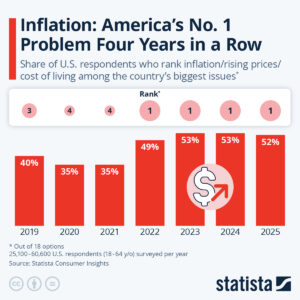

The global economy is showing signs of cautious stabilization in early 2026, as inflation continues to ease across major markets. However, persistent geopolitical tensions, shifting monetary policies, and uneven growth trends are keeping businesses and investors on edge.
In the United States, inflation has gradually declined following aggressive interest rate hikes over the past two years. The Federal Reserve has signaled a more measured approach to future rate decisions, balancing the need to sustain economic growth while ensuring price stability. Despite these improvements, consumer spending has begun to soften, raising concerns about a potential slowdown in the second half of the year.
Meanwhile, Europe is grappling with slower-than-expected recovery. High energy costs and weak industrial output continue to weigh on economic performance, particularly in Germany and France. The European Central Bank remains cautious, maintaining relatively high interest rates to control lingering inflation pressures, even as businesses call for more supportive policies.
In Asia, China has set a modest growth target of around 4.5–5% for 2026, reflecting structural challenges in its property sector and declining export demand. While government stimulus measures aim to boost domestic consumption, analysts warn that recovery may remain uneven. Other Asian economies, including India and Southeast Asian nations, are emerging as relative bright spots, driven by strong domestic demand and expanding manufacturing sectors.
Global trade remains a key concern, with disruptions in strategic regions such as the Strait of Hormuz adding uncertainty to energy markets. Rising shipping costs and supply chain vulnerabilities continue to impact international commerce, forcing companies to rethink logistics and sourcing strategies.
On the corporate front, businesses are increasingly investing in artificial intelligence and automation to improve efficiency and reduce costs. While these technologies are driving innovation, they are also reshaping labor markets, prompting companies to restructure their workforce and prioritize digital skills.
Financial markets have responded with volatility, as investors weigh the prospects of lower inflation against the risks of slower growth. Equity markets have shown mixed performance, while demand for safe-haven assets such as gold remains relatively strong.
Looking ahead, economists expect the global economy to maintain moderate growth, but with significant regional disparities. Policymakers will face ongoing challenges in balancing inflation control, economic expansion, and financial stability in an increasingly complex global landscape.