
March 2026
The United States economy is navigating a period of heightened uncertainty as financial markets react to geopolitical tensions, shifting interest rate expectations, and mixed economic data. While some indicators point to resilience, growing risks are raising concerns about the outlook for the remainder of the year.
Wall Street experienced significant volatility this week, with the Dow Jones Industrial Average jumping more than 600 points after signs of potential de-escalation in the Middle East conflict lifted investor sentiment. The rebound followed earlier losses driven by fears of rising oil prices and global instability. Analysts caution, however, that markets remain highly sensitive to geopolitical developments, particularly involving energy supply routes.
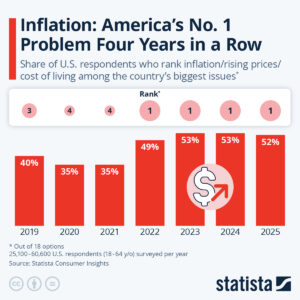
At the same time, recession fears are beginning to rise. Goldman Sachs has increased the probability of a U.S. recession within the next 12 months to 30%, citing higher energy costs, tighter financial conditions, and slowing economic momentum. GDP growth is expected to remain below trend, with projections between 1.25% and 1.75% for the year. The housing market is also facing pressure as mortgage rates climb again. The average 30-year fixed mortgage rate has risen to around 6.36%, dampening demand for home purchases and refinancing activity. Although rates are still below previous peaks, affordability challenges continue to weigh on potential buyers. Despite these concerns, the U.S. labor market remains relatively stable. Weekly jobless claims have fallen to approximately 205,000, signaling low layoffs and continued resilience in employment. However, hiring has slowed, and economists warn that prolonged uncertainty could weaken job growth in the coming months. The Federal Reserve has maintained its benchmark interest rate, emphasizing a cautious approach as inflation remains slightly elevated while economic activity continues to expand at a moderate pace. Policymakers are expected to closely monitor incoming data before making further adjustments to monetary policy.
Overall, the U.S. economy in March 2026 presents a mixed picture: strong labor conditions and resilient growth on one hand, but rising recession risks, high borrowing costs, and global instability on the other. Businesses and investors are likely to remain cautious as they navigate an increasingly complex economic environment.